Showing posts with label nature. Show all posts

Thursday, April 02, 2009

What a large Arthropod you have


I just stumbled upon an insane image of a coconut crab raiding someone's trash. I immediately thought it was some internet hoax since rudimentary searches yielded only that single photo. However increased searches turned up that it is in fact a real beast. The largest of land arthropods, so named because they live in the tropics (mostly the Philippines) and roam around cracking open coconuts and small dogs and feasting on their insides. Not really small dogs. They can get to be 19inches in diameter, but knowing nature, probably have pushed past that in a few specimens over the years. They are much less afraid of humans than they generally are of them, and, apparently, have been known to raid people's garbage. Basically just giant bugs filling the open niche left by raccoons in the tropics.

Think that's gnarly however, and I'll turn your attention towards one of the biggest arthropods ever to have lived. Slimonia of the family Hibbertoperus. It was a species of water scorpion 5 feet in length. It lay in wait motionless in prehistoric UK bogs some 330 million years ago. It is believe that this is about the absolute physical limits of what an arthropod can grow to. Horrors yesterday and today. What a world.

National Geographic

Wednesday, March 25, 2009

Unbearable Lightness of Peeing

Since I am traveling to Africa in June (Malawi specifically), and I made the mistake of informing my mother of these plans before I was already in the country, I have been the recipient of a steady stream of things that will undoubtedly try to kill me on my travels. The most disturbing was her insistence that I not pee into any rivers or bodies of fresh water, citing a parasite that will swim up you urine stream and root itself in your urethra. I immediately agreed that this was not something that I have any desire to mess around with, and it is a small sacrifice to give up peeing into water.

Something of this description begs investigation however, so here it is. The parasite is a fish called the candiru which (phew) lives in the Amazon. It is a type of catfish that feasts principally on the blood of other animals. It is nearly translucent in water, and lays in wait at the bottom of the river for prey to happen by. The disturbing aspect of its parasitism is that it makes straight for the exposed orifices of the unsuspecting host. It swims in, hooks in its barbs, and gorges itself on blood until it becomes so swollen that its own exit becomes difficult.


The candiru's legendary ability to swim up pee streams is a myth, but they are aggressive, and will leap for it if at close enough range. Because of their barbs, they are nearly impossible to remove without surgery. They are on average about 3 inches long but can get up to 7.

So it looks like I'm off the hook with those buggers for now, but I've still got bilharzia parasites to worry about. Or, more accurately, for my mother to worry about. Sorry Mom. I'll bring you back somethin nice.

SOURCES:
Associated Content
Damn Interesting

Tuesday, May 08, 2007

Two things I just learned about that make me want to fucking kill myself.

And no it's not global warming, or pollution, or our terminal race of military inflation; not poverty, nor famine, death, murder, or disease. I want to die because there is A) a newly discovered spider that FUCKING EATS CHICKENS! and B) a desert arachnid that can run at speeds up to 10 miles per hour.

Here is the lovely subject A:

I thought bird eating spiders were the worst, but this lovely beast was just discovered in a hole in the Amazon. They can grown to be bigger than a foot in length, are rumored to eat chickens.

More on the discovery.

Then there's subject B:

A pair of camel spiders. This photo shows two of them dangling from each other, but yeas they are that FUCKING big and they can run 10 miles an hour, which is just a little bit slower than I would be running if I ever saw one of them. They are not actually spiders, but a classification of arachnids, like scorpions, all their own. They do not purportedly carry any venom, but they can probably bite you arm off, so I still wouldn't recommend trying to start anything with one of them.

I have fought long and hard to overcome a childhood fear of arachnids, and feel that I am doing pretty well, but the existence of these two creatures on the same planet as me is really, just a bit much. I'm considering suicide as an option, but I think I will probably just relegate my travel to areas with no confirmed sightings of these monsters.

Link if you care to see either of these beasts in motion.

Monday, April 02, 2007

Evolving Bananas


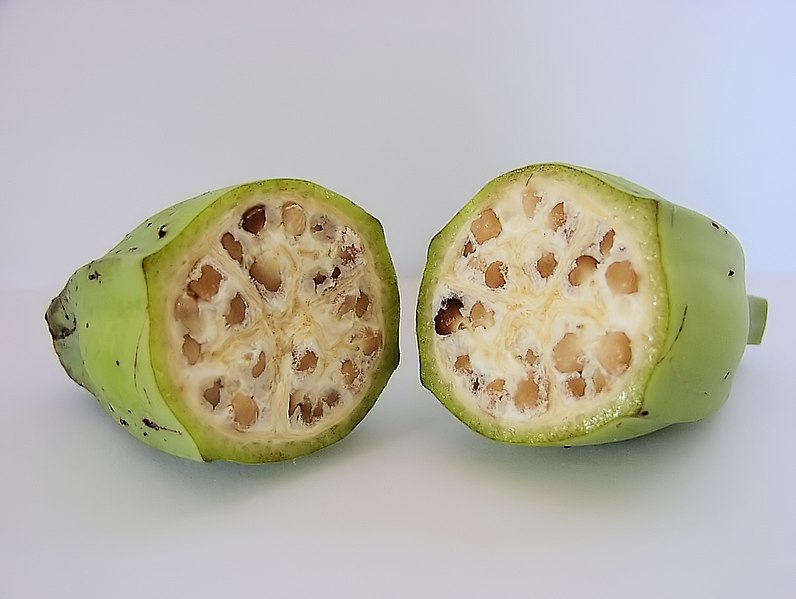
Wild Banana

I recently learned that atheists are wrong, and god has to exist because bananas are easy to eat. Link. But some nagging doubt in the back of my mind stuck around. "That just can't be true." I thought. So, rather than resorting to logic, which was my original defense, I have been tipped off to a bit of history that I find particularly crucial in this particular case.

The particular variety of banana that was most recently drafted into the army of god is a mutant. The cultivation of bananas goes very far back into human history. The first mention of a banana occurs around 600 B.C.E. in a Buddhist text. If you're keeping score this is also hundreds of years before Christianity evolved. Anyway, the variety of bananas we consume are cultivated mutations on the banana genome.


From About: Bananas

Historical bananas were not the sweet yellow banana we know today, but the red and green cooking variety, now usually referred to as plantains to distinguish them from the sweet type.

The yellow sweet banana is a mutant strain of the cooking banana, discovered in 1836 by Jamaican Jean Francois Poujot, who found one of the banana trees on his plantation was bearing yellow fruit rather than green or red. Upon tasting the new discovery, he found it to be sweet in its raw state, without the need for cooking. He quickly began cultivating this sweet variety.


More smoke for the gun from Wikipedia
While the original bananas contained rather large seeds, triploid (and thus seedless) cultivars have been selected for human consumption. These are propagated asexually from offshoots of the plant. The plant is allowed to produce 2 shoots at a time; a larger one for fruiting immediately and a smaller "sucker" or "follower" that will produce fruit in 6–8 months time. The life of a banana plantation is 25 years or longer, during which time the individual stools or planting sites may move slightly from their original positions as lateral rhizome formation dictates. Latin Americans sometimes comment that the plants are "walking" over time.

Cultivated bananas are parthenocarpic, which makes them sterile and unable to produce viable seeds. Lacking seeds, another form of propagation is required. This involves removing and transplanting part of the underground stem (called a corm). Usually this is done by carefully removing a sucker (a vertical shoot that develops from the base of the banana pseudostem) with some roots intact. However, small sympodial corms, representing not yet elongated suckers, are harder to transplant and can be left out of the ground for up to 2 weeks; they require minimal care and can be boxed together for shipment.


So, the bananas that god allegedly made for us humans to eat with ease are not even naturally viable as a species. They had to evolve before they could even get to that state. Not that that PROVES anything, except that humans also eat pineapples and coconuts.

Thursday, March 29, 2007

Andrewsarchus


Surfing the internet this morning, I accidentally stumbled upon the largest carnivorous mammal to have ever existed: the andrewsarchus mongliensis. The andrewsarchus was the largest of a wholly extinct genus of carnivorous ungulates (hoofed animals).

More from Wikipedia:

Andrewsarchus is known only from an enormous, meter-long skull and pieces of bone, but the skull's similarity to that of smaller mesonychids suggests that Andrewsarchus had the same wolf-like body on a larger scale. Extrapolating from the body proportions of similar mesonychids, Andrewsarchus was most likely about 4-6 metres (13-18 feet) long, standing nearly 2 metres (6 feet) at the shoulder, making it the largest terrestrial carnivorous mammal that has ever existed. It probably averaged about 1500 kilograms in weight with some exceptional animals over 2000 kilograms, making it over twice as heavy as most Kodiak brown bears, and rather heavier than a Percheron horse.

The skull of Andrewsarchus was found in Late Eocene sediments in what is now Mongolia. As there has only been a skull and a few bones found, it is still too premature to speculate on its time range, beyond being a Late Eocene apex predator.

To judge from its immense jaws, and the coastal location of the fossils, Andrewsarchus may have fed on beached primitive whales, shellfish and hard-shelled turtles, and contemporary large mammals at various periods during its existence. Toward the end of the Eocene very large mammals (such as the brontotheres) had evolved in the region of Central Asia. Andrewsarchus possessed some of the strongest jaws ever evolved in a land mammal, able to bite through large bones if needed.

Despite the enormous jaws and very sturdy teeth, Andrewsarchus did not have teeth adapted for the carnassial shear, though its immensely powerful jaws rendered such an adaptation unnecessary. Judging by its sheer size, the animal fed on large animals such as the extinct brontotheres, which were among the largest herbivorous mammals at the time. Simply scavenging smaller animals would not have required a body and jaws of the size that Andrewsarchus possessed (over twice that of a modern brown bear). It was not adapted to eating plants or digging, and hence could not enjoy an omnivorous lifestyle as do pigs and bears today. Most likely, it fed off of brontotheres, possibly both hunting them, and scavenging already dead carcasses.

By the mid Oligocene, the Creodonts supplanted both the Mesonychids, and giant flightless predatory birds entirely in North America, Eurasia and Africa, and in turn, competed with their relatives, the true carnivores until the last creodont genus, Dissopsalis, went extinct about 8 million years ago. The order Carnivora includes such animals as the dogs, cats, and bears. Various species of Carnivora have now spread (partly assisted by humans) to every continent, as well as most islands, and have replaced most other large non-avian terrestrial predators worldwide.

Saturday, March 24, 2007

Cordyceps strikes again!

This time in video.


Link to a previous post on Cordyceps.

Friday, March 09, 2007

Pygmy Slow Loris


I went out to the Lincoln Park Zoo today because it's the first nice day we've had in Chicago all year. I stopped by to pay a visit to my favorite critters, the pygmy slow loris of Vietnam. They have almost no information posted about them at the zoo, and the curators holding the brown sand boa had already proved to be unhelpful, so I swore to myself that I would come home and do some research on the loris. So here it is:

The Pygmy Slow Loris (Nycticebus pygmaeus) is a rare species of loris found in the tropical dry forests of Vietnam, Laos, China, and parts of Cambodia. About 72,000 of the creatures live in the wild, and 183 are in captivity.[2]

This primate is a nocturnal animal and will eat fruit, insects, small mammals, slugs and snails. It can catch prey by licking a toxin that is released from the inside of its elbows and delivering the toxin via its teeth.

It is arboreal, crawling on branches, unnoticed as it quietly moves through the thick leaves of the subtropics. It lives together in small groups usually with 1-2 offspring.

Adults can grow to around 18-21cm long[3] and have virtually no tail. They weigh about 1 pound (450 grams)

It mates once every 12-18 months and will have 1-2 offspring after an average gestation period of 190 days. For the first few days, the young loris clings to belly of its mother. After 9 months the baby will be weaned and at that point the females will be at sexual maturity while the male reaches maturity between 17 to 20 months.

This loris was nearly wiped out during extensive burning, clearing and defoliating of forests in Vietnam during the Vietnam war.

So now I'll have something to talk with them about next time I go to the zoo.

from Wikipedia

Saturday, February 24, 2007

Rabid

Here is another example of something I've known for a long time, but was never clear on the exact details. This interest springing up after viewing the 1971 hippie gore freakout film, I Drink Your Blood, in which a town is overrun by a group of rabid hippie satanic freaks.

Here are the facts:

The virus is usually present in the blood and saliva of a symptomatic rabid animal. The route of infection is usually, but not necessarily, by a bite, and in many cases in animals, causes the victim to be exceptionally aggressive, attack without provocation, and exhibit otherwise uncharacteristic behavior[1]. Transmission has occurred via an aerosol through mucous membranes; transmission in this form may have happened in people exploring caves populated by rabid bats. Transmission between humans is extremely rare, although it can happen through transplant surgery (see below for recent cases), or, even more rarely, through bites or kisses.

After a typical human infection by bite, the virus directly or indirectly enters the peripheral nervous system. It then travels along the nerves towards the central nervous system. During this phase, the virus cannot be easily detected within the host, and vaccination may still confer cell-mediated immunity to preempt symptomatic rabies. Once the virus reaches the brain, it rapidly causes encephalitis and symptoms appear. It may also inflame the spinal cord producing myelitis.

The period between infection and the first flu-like symptoms is normally three to twelve weeks, but can be as long as two years. Soon after, the symptoms expand to cerebral dysfunction, anxiety, insomnia, confusion, agitation, abnormal behavior, hallucinations, progressing to delirium. The production of large quantities of saliva and tears coupled with an inability to speak or swallow are typical during the later stages of the disease; this can result in "hydrophobia". Death almost invariably results two to ten days after the first symptoms; the few humans who are known to have survived the disease were all left with severe brain damage, with the recent exception of Jeanna Giese.

The virus has a bullet-like shape with a length of about 180 nm and a cross-sectional diameter of about 75 nm. One end is rounded or conical and the other end is planar or concave. The lipoprotein envelope carries knob like spikes, composed of Glycoprotein G. Spikes do not cover the planar end of the virion. Beneath the envelope is the membrane or matrix (M) protein layer which may be invaginated at the planar end. The core of the Virion consists of helically arranged ribonucleoprotein. The genome is unsegmented linear antisense RNA. Also present in the nucleocapsid are RNA dependent RNA transcriptase and some structural proteins.


You've generally got about fourteen days after exposure to get your PEP shots before the infection hits your brain so try and get out for some medical treatment, or else you'll turn into a hippie freak and infect the whole town.

from Wikipedia

Thursday, February 15, 2007

Female Complex


The spotted hyena of Africa has a very peculiar attribute pertaining to gender. Long thought to be true hermaphrodites the females of the species (which are by far the dominant gender) actually posses masculinised genitalia. The females have no vagina, and have an elongated clitoris that resembles the male penis in nearly every way.

From Wikipedia:

The female Spotted Hyena's urogenital system is unique among mammals: there is no vagina, and the clitoris is as large and as erectile as the male's penis - only the shape of the glans makes it possible to visually tell the sexes apart. The female urinates, mates and gives birth through this pseudo-penis (it dilates for mating, the opening widening to admit the male's penis). It was thought that the development of this structure depended on a masculinisation process triggered by the action of androgens on the female fetus, but experiments with anti-androgens show that it still forms in the effective absence of the hormone, so it is now ascribed to normal morphogenesis and sexual mimicry. Since it is impossible to penetrate without the female's cooperation, female hyena have full control over who they choose to mate with.

Birth is very difficult: the internal birth canal extends almost to the subcaudal location of the vulva (which in Crocuta is fused to form a scrotum containing fatty pseudo-testes) before turning abruptly towards the clitoris, and the clitoris itself is narrow (although it ruptures with the first parturition, making subsequent births easier). In captivity, many cubs of primiparous mothers are stillborn because of the long labour times involved; in the wild, survival rates of females seem to fall sharply around the age of first giving birth, suggesting that the process is hazardous for the mother also. This suggests that at some point there must have been powerful selective pressures driving the evolution of masculinisation.

Researchers originally thought that one of the things that causes this characteristic of the genitals is androgens that are expressed to the fetus very early on in its development. However, it was discovered that when the androgens are held back from the fetus, the development of the female genitalia was not altered. Other hyena species lack this adaptation, making it a fairly recent one in the hyena line. Masculinised female genitalia also appears in some lemurs, spider monkeys, and the binturong but the fused vulva is unique to the hyena.


There are a few other mammals with similarly masculinised genitals, but the pseudo-scrotum is unique among the spotted hyena. It should also be noted that no other genus of Hyena possesses this characteristic.

Tuesday, February 13, 2007

Mini Mouse


I read recently about the ability to engineer a certain type of mouse in the lab by crossbreeding two mice of differing developmental growth deficiencies. While trying to find more information on the subject, however, I stumbled upon the naturally occurring African Pygmy Mouse, which is of similar size and variety.

The mini-mouse is achieved by parenting a mouse with a defective growth-hormone receptor gene with a mouse with defective IGF gene. The mouse lacking the growth-hormone receptors is only about half the size of a normal lab mouse, whereas the mouse with deficient IGF is only about a third of the size. The product of this dominant gene deficient union is lacking in both and end up weighing around 5grams fully grown.

This is incredible small for a mammal. A dime weighs 2 grams. So stack up 2 to 3 dimes and you'll have the equivalent weight of a living mammal in your hands. IInterestingly this is the same size as the naturally occurring pygmy mouse. I do not yet know if they are a result of similar deficiencies, but I would have to assume otherwise at this point since they make up an entire species. The differences in biology between these two tiny rodents could be uite revealing.

Wednesday, January 31, 2007

If God were real, he would be a lunatic.


This is a recently discovered species of assassin spider. The type of spider was found last year on the island of Madagascar. It preys on other spiders by injecting them with venom out of it's enormous (relatively) fangs, and extending it's long neck to attack it's prey from a distance. Yes, this spider has a neck. Yes it's one of the scariest looking things I can imagine. Luckily they only grow to be, at largest, 2mm in size, but we're just finding out about this type of spider and have already discovered 9 different species of them, so who's not to say that there are some that eat birds or dogs. Another interesting fact about these buggers (or bugs, well arachnids technically) is that this genetic variation has come up at least twice in independent paths of evolutionary history. From Animal Planet News:

The genetics of the new assassin spiders have yielded yet another surprise, said Griswold. The genetic map of the assassin spider family history suggests the long necks and jaws evolved more than once, in what's called convergent evolution, he said.

Convergent evolution is analogous to two people stumbling onto a very similar solution to a problem independently of each other. Apparently, the longer necks are an effective solution that caught on more than once. It's just a little family secret that's impossible to detect if you're just looking the spiders themselves, said Griswold.


Anyway, I'm probably going to have nightmares tonight, and I suggest you do the same. Nature is capable of more bizzare things than we could ever come up with on our own. These new spiders are just a few more examples.


from: Wikipedia: Assassin Spider
National Geographic News
Animal Planet News

Tuesday, January 23, 2007

The Earth's Ages


The Earth is where we live. The Earth is old. Currently believed to be around 4,570 million years old, give or take a year. Please note that this is considerably longer than the 6 thousand years that certain mythologies propose. Why these mythologies are still believed is another matter entirely. It should also be noted that the Earth is relatively young with the origin of the Universe hanging somewhere around 13.7 billion years ago.

So how is the age of the Earth documented? We all know (or think we know) about the Jurassic (Park) and the Cretaceous, but can you put them in order? Do you know which Age or Eon we are in now? Good, because I do now too.

The largest defined unit of time is the Eon. Eons are divided into Eras, which are in turn divided into Periods, Epochs and Stages. Now, some history on the Earth's history:

The first serious attempts to formulate a geological time scale that could be applied anywhere on Earth took place in the late 18th century. The most influential of those early attempts (championed by Abraham Werner, among others) divided the rocks of the Earth's crust into four types: Primary, Secondary, Tertiary, and Quaternary. Each type of rock, according to the theory, formed during a specific period in Earth history. It was thus possible to speak of a "Tertiary Period" as well as of "Tertiary Rocks." Indeed, "Tertiary" and "Quaternary" remained in use as names of geological periods well into the 20th century.

The identification of strata by the fossils they contained, pioneered by William Smith, Georges Cuvier, Jean d'Omalius d'Halloy and Alexandre Brogniart in the early 19th century, enabled geologists to divide Earth history more precisely. It also enabled them to correlate strata across national (or even continental) boundaries. If two strata (however distant in space or different in composition) contained the same fossils, chances were good that they had been laid down at the same time. Detailed studies of the strata and fossils of Europe produced, between 1820 and 1850, the sequence of geological periods still used today.

Study the following information: Wikipedia: Geologic Time and Smithsonian: Geologic Time so you can be smart, and because thirst for it, and tell all your friends how old you really are, because the DNA in your cells goes back to the origins of life on this planet, some 400 million years, and the atoms that make up those cells go back to the origins of the universe and time. We are all very old indeed.

Also: Remote Sensing: Geologic Time

Wilbur and Orville, Right.


Tired, but really fascinating article from Scientific American about a new theory on dinosaur (or microraptor at least) flight. From the article:

On parts of the creature's arms and legs, the discoverers observed a series of long asymmetric feathers, with one side of the feather narrower than the other. In modern birds such asymmetry is considered a hallmark of aerodynamic function—like the asymmetry of an airplane wing. Based on the orientation of the feathered remains, the group imagined the dinosaur flying spread-eagled, with wings trailing from each limb.

Paleontologist Sankar Chatterjee of Texas Tech University and his colleague, retired aeronautical engineer R. Jack Templin of Ottawa, Ontario, take issue with the reconstruction in a paper published online by the Proceedings of the National Academy of Sciences USA. "We realized there's something wrong in the anatomy because no dinosaurs could splay their legs sideways," Chatterjee says. "No birds can do that."

Chatterjee and Templin instead envisioned Microraptor's legs tucked under its body, with its rear feathers parallel to and beneath the feathers on its outspread arms. "It's a very common posture in living raptors," such as when holding prey, Chatterjee says. That's also a more realistic position, they say, because it puts the leading, narrower edges of the leg feathers forward against the direction of airflow, like the arm feathers. The spread-eagled wing plan had the feathers in clashing orientations, they note.


So tongiht when you drift off to sleep, instead of picturing raptors soaring through the air spread eagle, picture dozens of carnivorous, feathered biplanes swooping and soaring above Cretaceous Earth.

Article

Saturday, January 13, 2007

Big Fucking Rabbits


Apparently North Korea wants to start breeding the German Grey strain of giant rabbits for food. I didn't know rabbits could get to this size, but here you have it. They are selectively bred all over Europe, but this man, Karl Szmolinsky, has engineered some of the biggest ever. His rabbits regularly break 20lbs, and are as big as well fed children. Everything else aside, they freak me out.

from:
Times UK article
Der Spiegle
Boing Boing

Wednesday, January 03, 2007

Freaky Fungus

I generally try to do better than just transmission of other people's posts, but this is just too cool to pass up:


Deep in the Cameroonian rain forests of west-central Africa there lives a floor-dwelling ant known as Megaloponera foetens, or more commonly, the stink ant. This large ant -— indeed, one of the very few capable of emitting a cry audible to the human ear -— survives by foraging for food among the fallen leaves and undergrowth of the extraordinarily rich rain-forest floor.

On occasion, while thus foraging, one of these ants will become infected by inhaling the microscopic spore of a fungus from the genus Tomentella, millions of which rain down upon the forest floor from somewhere in the canopy above. Upon being inhaled, the spore lodges itself inside the ant’s tiny brain and immediately begins to grow, quickly fomenting bizarre behavioral changes in its ant host. The creature appears troubled and confused, and presently, for the first time in its life, it leaves the forest floor and begins an arduous climb up the stalks of vines and ferns.

Driven on and on by the still-growing fungus, the ant finally achieves a seemingly prescribed height whereupon, utterly spent, it impales the plant with its mandibles and, thus affixed, waits to die. Ants that have met their doom in this fashion are quite a common sight in certain sections of the rain forest.

The fungus, for its part, lives on. It continues to consume the brain, moving on through the rest of the nervous system and, eventually, through all the soft tissue that remains of the ant. After approximately two weeks, a spikelike protrusion erupts from out of what had once been the ant’s head. Growing to a length of about an inch and a half, the spike features a bright orange tip, heavy-laden with spores, which now begin to rain down onto the forest floor for other unsuspecting ants to inhale.

So if you go to the rain forest in Camaroon, don't look up and don't inhale.

From Boing Boing
And Mr. Wilson's Cabinet

Friday, November 17, 2006

and plasma

In my reading on lasers I cam across plasma, another thing that movies have led us to believe will blow the wings off a spacecraft. Well, slow don the Han, because plasma is actually just a state of matter separate from solids, liquids, and gasses. Here's what Wikipedia has to say:

In physics and chemistry, a plasma is typically an ionized gas, and is usually considered to be a distinct phase of matter in contrast to solids, liquids, and gases because of its unique properties. "Ionized" means that at least one electron has been dissociated from a proportion of the atoms or molecules. The free electric charges make the plasma electrically conductive so that it responds strongly to electromagnetic fields.

This fourth state of matter was first identified in a discharge tube (or Crookes tube), and so described by Sir William Crookes in 1879 (he called it "radiant matter")[1]. The nature of the Crookes tube "cathode ray" matter was subsequently identified by English physicist Sir J.J. Thomson in 1897[2], and dubbed "plasma" by Irving Langmuir in 1928 [3], perhaps because it reminded him of a blood plasma [4]. Langmuir wrote:

"Except near the electrodes, where there are sheaths containing very few electrons, the ionized gas contains ions and electrons in about equal numbers so that the resultant space charge is very small. We shall use the name plasma to describe this region containing balanced charges of ions and electrons."[3]

Plasma typically takes the form of neutral gas-like clouds or charged ion beams, but may also include dust and grains (called dusty plasmas). [5] They are typically formed by heating and ionizing a gas, stripping electrons away from atoms, thereby enabling the positive and negative charges to move freely.

Sunday, November 05, 2006

all dogs go to heaven


After numerous trips to the Lincoln Park Zoo the wolves were out. I had been more excited about seeing them than anything else (probably because they're so damn elusive) and when I finally got a look today I remembered that wolves are just freakin dogs! Oh yeah, I see those all the time. Although a passing ambulance did produce a chorus of yelps and howls; dogs rarely do anything that exciting anymore. So in honor of the decidedly uninteresting reminder of the ancestry of dogs, I thought I would do some investigation into the decidedly interesting into the ancestry of dogs.

Molecular systematics indicate that the domestic dog (Canis lupus familiaris) descends from one or more populations of wild wolves (Canis lupus). As reflected in the nomenclature, dogs are descended from the wolf and are able to interbreed with wolves.

The relationship between human and canine has deep roots. Wolf remains have been found in association with hominid remains dating from 400,000 years ago. Converging archaeological and genetic evidence indicate a time of domestication in the late Upper Paleolithic close to the Pleistocene/Holocene boundary, between 17,000 and 14,000 years ago. Fossil bone morphologies and genetic analysis of current and ancient dog and wolf populations have not yet been able to conclusively determine whether all dogs descend from a single domestication event, or whether dogs were domesticated independently in more than one location. Domesticated dogs may have interbred with local populations of wild wolves on several occasions (so-called introgression).

The earliest dog fossils, two crania from Russia and a mandible from Germany, date from 13,000 to 17,000 years ago. Their likely ancestor is the large northern Holarctic wolf, Canis lupus lupus. Remains of smaller dogs from Mesolithic (Natufian) cave deposits in the Middle East, dated to around 12,000 years ago, have been interpreted as descendants of a lighter Southwest Asian wolf, Canis lupus arabs. Rock art and skeletal remains indicate that by 14,000 years ago, dogs were present from North Africa across Eurasia to North America. Dog burials at the Mesolithic cemetery of Svaerdborg in Denmark suggest that in ancient Europe dogs were valued companions.

Genetic analyses have so far yielded divergent results. VilĂ , Savolainen, and colleagues (1997) concluded that dogs split off from wolves between 75,000 and 135,000 years ago, while a subsequent analysis by Savolainen et al. (2002) indicated a "common origin from a single gene pool for all dog populations" between 40,000 and 15,000 years ago in East Asia. Verginelli et al. (2005), however, suggest both sets of dates must be reevaluated in light of recent findings showing that poorly calibrated molecular clocks have systematically overestimated the age of geologically recent events. On balance, and in agreement with the archaeological evidence, 15,000 years ago is the most likely time for the wolf-dog divergence.

Verginelli examined ancient DNA evidence from five prehistoric Italian canids carbon-dated to between 15,000 and 3,000 years old, 341 wolves from several populations worldwide, and 547 purebred dogs. Their results indicate multiple independent origins of dogs and/or of frequent interbreeding between early proto-dogs and wolves throughout a vast geographic range. The detailed history remains unexplored and until further evidence is available, the following section on wolf ancestors must be considered purely speculative.

from Wikipedia

Dog drawing by: Hitler

Friday, October 20, 2006

non-wild stallions


The horse (Equus caballus, sometimes seen as a subspecies of the Wild Horse, Equus ferus caballus) is a large odd-toed ungulate mammal, one of ten modern species of the genus Equus. Horses first evolved in the Americas, but went extinct there until reintroduced by Europeans. Horses have long been among the most economically important domesticated animals and are prominent in religion and mythology. The horse has played an important role as transportation, as a source of food, fuel, and clothing, and as a weapon. While isolated domestication may have occurred as early as 10,000 years ago, the first clear evidence dates to c. 5000 BC, and becomes widespread only after 2000 BC. Selective breeding since that time has produced numerous breeds. Some have been bred so that they can be ridden, usually with a saddle, while other breeds can be harnessed to pull objects like carriages or plows. In some societies, horses are a source of food, both meat and milk; in others it is taboo to consume them. In industrialized countries horses are predominantly kept for leisure and sporting pursuits, while they are still used as working animals in many other parts of the world.

Competing theories exist as to the time and place of initial domestication. The earliest evidence for the domestication of the horse comes from Central Asia and dates to approximately 4,500 BC. Archaeological finds such as the Sintashta chariot burials provided unequivocal evidence that the horse was definitely domesticated by 2000 BC.


from Wikipedia

Wednesday, October 11, 2006

a pain in the ass

So what awesome new thing did I get to learn about today? Was it lazers? Or quantum teleportation? Or Linguistic origins of the word "fuck"? No, today I got to learn all about hemorrhoids! Por que? Why? Because it fucking hurts to do ANYTHING!

So let's begin our descent into the wonderful world of rectal blood-vessel inflammation. It just sounds awesome, doesn't it? Well kids, hemorrhoids are inflamed or distended veins in and around your anus. They swell up and hurt really bad, and the only thing you can do about it is rub cream on em or offer them money until they decide to leave. Some people have to go to a doctor to have them removed, but I'm not a jerk.

They are most commonly caused by constipation, pregnancy, and diarrhea. Come to think of it, I am pregnant so that must be why I want to kill myself every time I sit down. Actually the third is probably the cause of my anguish. I was VERY sick last week. I have been advised by the Internet to take it easy, take salt baths and rub bizarre things all over my butt.

Okay, so maybe this wasn't the most informed bout of learning, but it is practical. Soon lazers. Soon. Until then, here's some required reading:

Cause of Hemorrhoids
Web MD Hemorrhoids
Wikipedia Hemorrhoids
Family Tree Hemorrhoids

2009 EDSEL/Lepanto Industries. aLT DELETE. A Division of LABOR CORP. NaDA Publishing.